In the eye of the hurricane, there is football
How should athletics be handled when weather is involved?
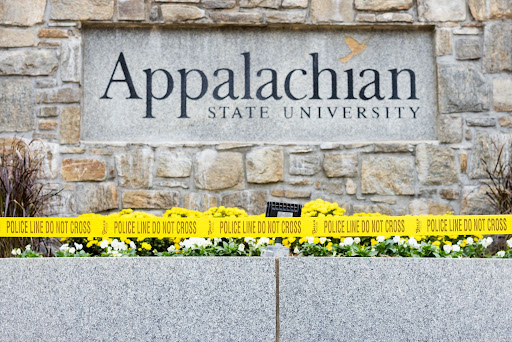
Appalachian State University and the surrounding cities faced flooding, leading to closures from law enforcement. (via Appalachian State University, 10/1/24)
It happens almost every year. Fans passing out due to heat, fans getting hypothermia during winter games, teams and leagues debating whether hosting an outdoor game is worth it given the weather concerns. This football season, Mother Nature hit the southeast with intense forces: hurricanes.
Football in the south, as the Southeastern Conference’s (SEC) motto suggests, “just means more” — the seriousness of this sport extends beyond the SEC too, with Atlantic Coast Conference (ACC) teams and Sun Belt teams facing hard decisions about what to do about football games impacted by hazardous weather.
Clemson, for example, received tons of backlash for hosting a game while the town of Clemson is suffering from the damages of Hurricane Helene, while ETSU had to endure a lengthy travel day due to road damage just in order to make it to their away game. The question lies: is it ethical to expect the game to go on while hundreds of civilians nearby are struggling?
EXTREME HEAT AND COLD ARE FAMILIAR CONCERNS
Every time the weather exceeds average conditions, people wind up in need of assistance. LSU, for example, had over 70 people end up in the hospital for overheating after their game against UCLA, and numerous Tennessee students saw people passed out in the stadium during the Chattanooga game. California high schools have attempted to combat this by enforcing heat policies for their athletics to avoid things like this happening.
The same situation can happen in extreme cold. The Chiefs-Dolphins game last winter, for example, was the coldest game in Arrowhead Stadium history, and many enjoyed watching the game; at home. At the game, there were calls to first responders, some of which ended up needing amputations due to hypothermia.
It is common for players to lather themselves in vaseline during cold games to stay warm, yet players can be fined for having too much vaseline on their bodies. These players are giving their all to perform in risky conditions for everyone’s pleasure.
HURRICANES POSE DIFFERENT THREAT
Now temperature, snow, rain, and wind are all one thing. They can be serious, but typically they are expected. Natural disasters, like hurricanes, can cause even more damage. It is the middle of hurricane season, with Hurricane Helene and Hurricane Milton behind us. Just last month, many schools in the southeast region of the states had to make tough decisions due to Helene regarding game cancellations and travel plans, including the aforementioned Clemson.
The risk of hurricanes isn’t just over when the hurricanes pass though. These decisions about whether or not to hold a game should also weigh the potential for unpredictable aftereffects, according to the chief meteorologist at WVLT 8, Heather Haley.
“An often overlooked risk is that hurricanes spawn tornadoes. That rotation is there and it is easy in certain setups for tornadoes to develop,” said Haley. “If there is a risk for damaging wind or storms ahead of a hurricane, then no sports should be played outside. During landfall of a hurricane, definitely no sports as there is often an evacuation or urge to seek shelter.”
Many schools suffered in the midst of these hurricanes and had to make the decision of whether or not to play, how to work around travel issues, and dealing with the damage to their facilities.
Caroline Abbey, a student at the University of Central Florida (UCF), and a resident of St. Petersburg said she thought UCF should have canceled its game in the midst of Hurricane Milton, which grew to be a Category 5 storm at one point.
“I think that it would not be a good idea to keep the game scheduled so soon after a deadly hurricane passes through due to many students, including athletes, most likely having to go home and help their families and community,” said Abbey. “A football game is not what is on anyone’s mind right now and not important considering the circumstances.”
UCF went on to host their game the following Saturday after Milton hit. The damage on its campus was not as bad as predicted and the schools were able to accommodate for it.
Abbey expected the game to be a difficult one though, given the storm and the emotions on campus.
“(It) may also throw UCF’s game off as priorities and mindsets won’t include winning a game at that time.” UCF did end up losing that weekend against Cincinnati.
Many students at UCF are from in-state, as Abbey said she was worried about her family and home who are in St. Petersburg.
DAMAGE EXTENDS INTO CAMPUSES IN FLORIDA & WESTERN NORTH CAROLINA
The damage from these hurricanes to facilities was devastating. Tropicana Field in Tampa may be “unsalvageable” after Hurricane Milton destroyed the roof and cost $39 million in damages.
Joey Jones, an athletic director for Appalachian State football stated that “(We) had damage at our basketball arena and at our wrestling facility, to the point where they are still working on the wrestling locker rooms.”
App State’s campus and the surrounding towns were also completely flooded. In Watauga County, over 200 roads were closed and damaged, and in Boone, roads collapsed and were washed away.
“-Once the university worked with the town and the county to determine that it was okay for football to come back and be able to play at home, we were able to play home football last saturday for the first time since the hurricane, and that was another encouraging thing that the community got to be there and doing it safely,” said Jones.
App State is happy to be back and playing football at home again, but its season took numerous blows from the hurricane. For starters, the team had to cancel their home game against Liberty University due to flooding. This left a gap in its schedule and the Mountaineers are now in need of playing well for the rest of the season and hoping that some other teams in their conference help them out in terms of playoffs by losing a few. On top of this, Jones mentioned that the football program has taken a financial blow from the hurricane.
“Financially, we’re still trying to recover and figure out what the future looks like,” he said.
Regardless, Jones is proud of his team and thinks that this is something his team can gain motivation from.
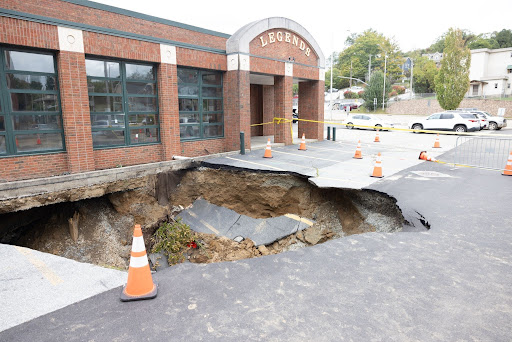
Road damage on App State’s campus. (via Appalachian State University, 10/1/24)
WHEN TEAMS CHOOSE TO PLAY
Clemson did not take a page out of App State’s book, as the Tigers went on with their homecoming game instead of canceling it, despite the town of Clemson and the surrounding towns being devastated by Hurricane Helene. The university was under fire from the surrounding community because outside of campus, many were without power, were suffering from home and road damage, and were unable to get the supplies they needed.
Mary Brooks, a student at the University of Tennessee and a resident of Greenville, Tennessee which was badly hit by Helene explained that the storm devastated her community and left residents without resources for weeks.
“We lost many homes and roads,” Brooks said. “Our main bridges collapsed and our dam almost broke. Many people lost power, everyone’s water was shut off. We just got water back not too long ago, but at the time it was unsafe to drink.”
These are similar circumstances to what the community of Clemson was facing, and then Clemson invited over 80,000 people to come in and watch their homecoming game.
Courtney Poole is a student at Clemson and is also a Rally Cat which is the university’s profound dance team. On top of this, she was a part of the homecoming court and the pageant — she had many reasons to be at the game. She defended Clemson’s decision to play, noting that the school wasn’t oblivious to the damage happening in nearby cities and did what it could to raise awareness, without having to cancel football.
A tradition at Clemson football games is for players and fans to say a prayer, and according to Poole. This time, she said, they prayed specifically for “the victims of Hurricane Helene…the first responders and people on the front lines and all the volunteers.”
“That really opened people’s eyes to the fact that Clemson is watching, Clemson is listening, Clemson is here,” Poole said.
After the game, the university posted information about facilities that were open to the public and places for donations.
“They opened up our Littlejohn Coliseum, which is the basketball coliseum, and they opened the showers in there and they had people bringing in donations, so there was food and wifi, and people could get power,” Poole said.
The student government as well as the Fellowship of Christian Athletes also held relief drives and volunteered. The following Monday, the university canceled classes. Many professors and students were unable to commute due to damage, and many were without power for weeks.
Donations and volunteering is one of the things that Jones, App State’s athletic director of football, said was a positive thing to come out of the hardships.
“There was about two and a half weeks before App State started classed back up after the hurricane hit, and for those two and a half weeks before classes started back, every single team on campus was out there volunteering,” Jones said. “And it wasn’t just athletics, it was the whole student body that was in town,”.
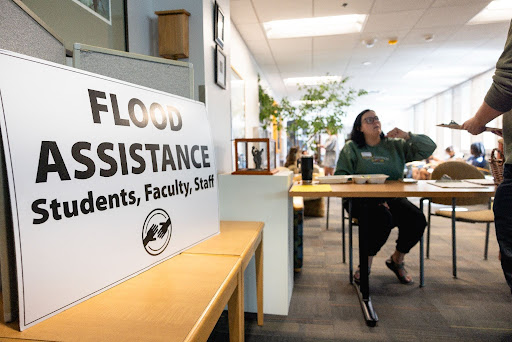
Appalachian State University held relief drives and flood assistance for those on campus and in the surrounding towns. (via Appalachian State University, 10/14/24)
LOOKING AHEAD
As hurricane season comes to a close, programs can start to relax, recover, and focus on the future. But a lot of lessons and questions have come out of these past few months.
Clemson’s backlash for going forward with their homecoming game while the town was suffering shows the challenge of choosing between giving up a game for the season versus looking at what is better for the destruction of the community. App State did cancel, but that came with difficulties as well.
Places like UCF have better preparations for weather such as these hurricanes, but was hosting that game after Milton the right choice? How should this struggle be handled in the future?
Teams should remember they can reschedule games and the sports world as a whole should work harder to reschedule games, rather than leave teams with a canceled game on their schedule or a tough travel day affecting morale. Hurricanes are a serious force to be reckoned with, but there can be accommodations made for teams facing these hardships.
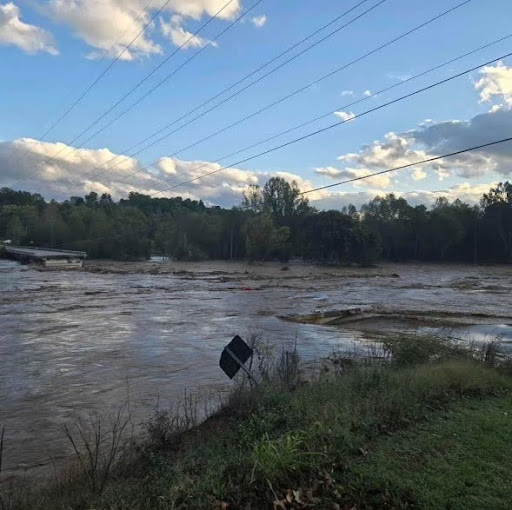
 Shelby Wilson | Journalist