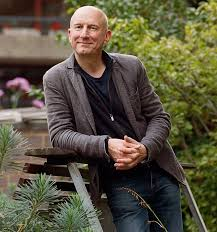
Sheffield Grey to Green Project by Nigel Dunnett
The Sheffield Grey to Green Project was created as a response to three main problems addressed by the Sheffield City Council. First, the Castlegate area was not connected to the rest of the central city, so they needed a way to reconnect it. Second, the floods in June 2007 had a major impact on Castlegate and the surrounding area. And lastly, they felt there was a need to reuse amounts of unnecessary highway. There were numerous phases to the project as well as many aspects of work done in the city, such as biodiversity, innovation, and new activities. The man in charge of the project is Nigel Dunnett, and he has many accomplishments to his name.
Nigel Dunnett is a Professor at the University of Sheffield and he teaches Planting Design and Urban Horticulture. He is a leader in plant design and has done numerous projects on the subject. Most of his work includes sustainable landscapes, public spaces, and more, as well as bringing nature to our surroundings to make our cities and landscapes much more breathable. Dunnett was the first winner of the Landscape Institute Award for Planting Design and this is only the tip of the iceberg for his accomplishments. He has won numerous other awards, written many books, and founded a company by the name of “Pictorial Meadows”.
On top of all of his work within the world of plant design and sustainability, he has been involved with three major projects in the UK: The Barbican in London (2015), the Tower of London Superbloom (2022), and of course, the Grey to Green Project in Sheffield (2016-2020).
The Grey to Green Project came to life in 2016, when Phase 1 was installed. It was funded by the Sheffield City Region with contributions from other entities. The goal of Phase 1 was to change a redundant road into a public space. This made the area much more pedestrian friendly, allowing for many more ways of public transportation, such as cycling, walking, and more. It was the first step towards more biodiversity in Sheffield, and did great things for the environment and the wildlife. The environment improved because there was less air pollution, containment of microplastics, and a sustainable urban drainage system, also known as SUDS, that improved the water quality. Phase 1 brought in rain gardens, perennial flower meadows, public art, and once again, modes for walkable transportation.
Phase 2 began in 2019 and was completed the following year. Again, this was funded by the Sheffield City Region with contributions from other entities, and this phase was much more expensive than the former. This was the project that mainly focused on Castlegate and achieved the goals to address issues with reconnecting Castlegate with the rest of the city.
It is the United Kingdom’s largest inner city “green street” as well as one of their biggest sustainable drainage system projects. These practices help prevent flooding by incorporating biodiversity that captures excess water on the ground. These natural runoff systems help the environment while also providing the population with greenery, art galleries, walking trails, and more. Some of the agricultural additions include small trees, flowers like daisies and perennials, ornamental grasses, new zealand sedge, and habitats for smaller wildlife.
Question: How might some cities in the United States take after Nigel Dunnett and the Grey to Green Project to make more of our cities walkable, breathable, and biodiverse?
 Shelby Wilson | Journalist